Advice
Ideas for Personalising a Funeral
Thoughtful ways to make the ceremony feel right for the person you’re remembering
Personalising a funeral doesn’t mean you have to arrange something unusual or spend more money. Often, the most personal parts are small choices: a familiar piece of music, a photograph that makes people smile or a story that could only belong to that person. You can personalise a traditional religious service, a civil or humanist ceremony, a burial, a cremation or a gathering held separately after a direct cremation. There’s no set level of personalisation that a funeral needs to reach. The aim is simply to help the people attending recognise the person being remembered.
Begin with the person, rather than a list of ideas
Before choosing individual details, think about what made the person themselves.
You might consider:
- the music they listened to;
- the places they loved;
- their work, interests or hobbies;
- colours they often wore;
- causes or organisations they supported;
- things they collected or made;
- their sense of humour;
- family traditions;
- their religious beliefs or personal values; and
- the ordinary habits people remember fondly.
Not every part of someone’s life needs to appear in the funeral. One or two well-chosen details often say more than a ceremony crowded with ideas.
Choose music that people will recognise
Funeral music doesn’t have to be solemn, classical or religious. It can be anything that feels suitable for the person and the people attending.
You might choose:
- a favourite song;
- music connected with a particular time in their life;
- a hymn or piece of sacred music;
- something played at their wedding;
- a song associated with family holidays;
- music from a film or stage show they enjoyed; or
- a piece performed by a relative, friend or local musician.
The words don’t always need to be about death or grief. Sometimes a song matters because everyone immediately associates it with the person.
Listen to the complete track before making a final decision. A familiar chorus may work beautifully while another verse feels less appropriate. The length of the music also needs to fit the available service time.
The funeral director will explain how music is supplied at the chosen venue and when selections need to be confirmed. If a particular recording cannot be found on the venue’s music system, there may still be another way to provide it.
Tell stories that sound like them
A tribute doesn’t need to read like a formal biography.
Dates, jobs and achievements can provide a useful outline, but personal stories help people remember the individual behind those facts. These might include:
- a phrase they always used;
- something they were particularly good—or hopeless—at;
- a family tradition they never missed;
- a kind thing they did without making a fuss;
- the way they welcomed visitors;
- a memorable journey or mishap; or
- a story that captures their character.
Gentle humour can be entirely appropriate. A funeral can include laughter as well as sadness, provided the story is told with warmth rather than at someone’s expense.
Our guide to writing a eulogy explains how to gather these memories and turn them into a tribute.
Invite other voices into the ceremony
The main tribute doesn’t have to be the only personal contribution.
Relatives and friends might:
- share a short memory;
- read a poem or passage;
- write something for the celebrant to read;
- perform a piece of music;
- offer a prayer;
- introduce a song; or
- record a contribution if they cannot attend.
Several short contributions can show different sides of someone’s life. A work colleague may remember them differently from a grandchild, neighbour or lifelong friend.
Nobody should feel pressured to speak. Giving the celebrant a written copy means they can take over if somebody becomes too emotional to continue.
Our guide to what a funeral celebrant does explains how the celebrant can bring these contributions together.
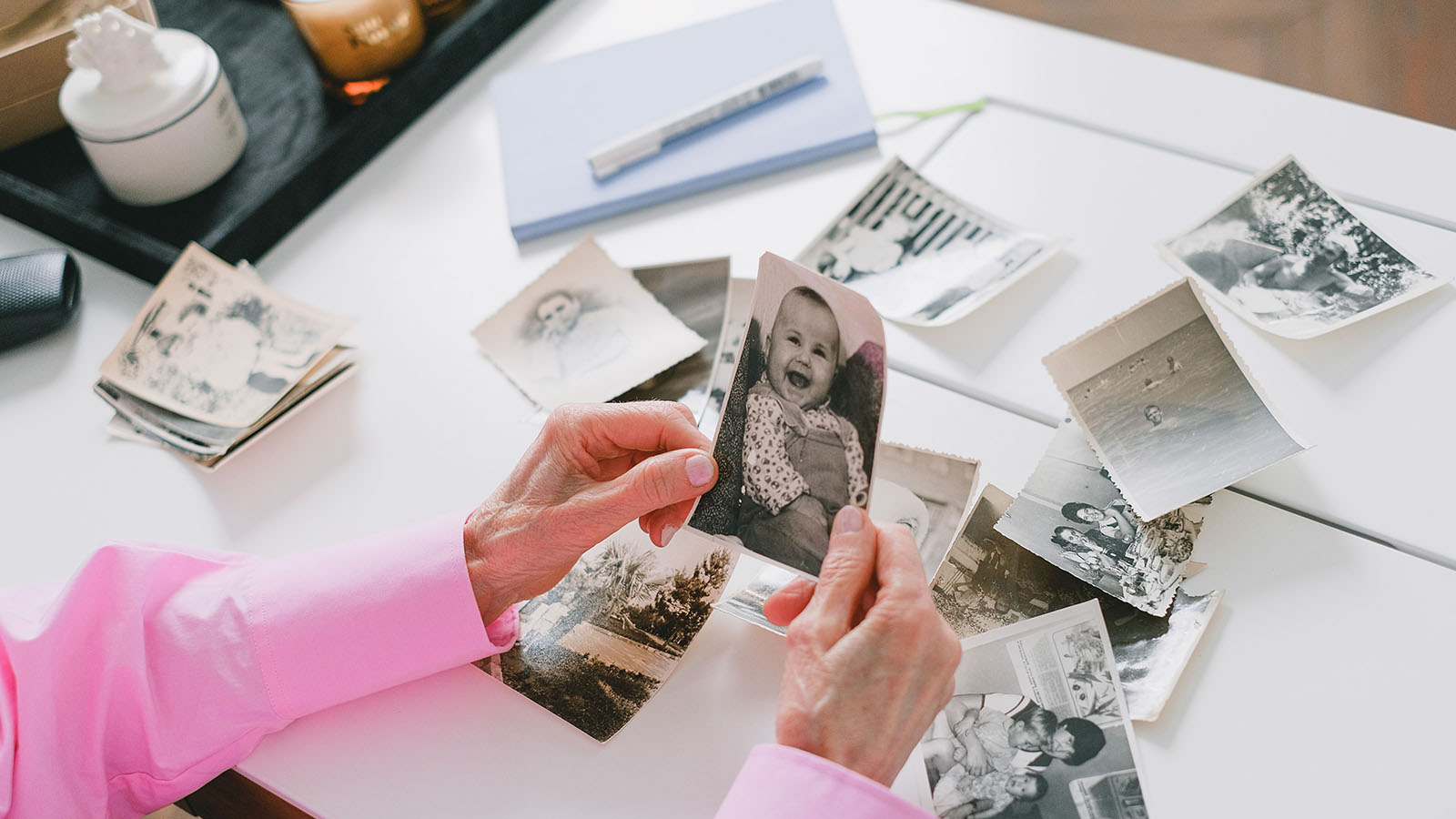
Use photographs carefully
Photographs can add warmth without taking attention away from the ceremony.
Options may include:
- one framed photograph near the coffin;
- a photograph on the order of service;
- a small display at the entrance;
- a memory table at the gathering afterwards;
- a slideshow or visual tribute; or
- photographs placed among flowers or personal belongings.
When choosing a main photograph, look for one that feels like the person people knew. It doesn’t need to be a formal portrait or a recent photograph.
A slideshow works best when it has been edited rather than containing every available picture. A smaller selection gives people time to see each photograph properly.
Check the required format, image quality and submission deadline with the funeral director. You should also be considerate of other people shown in private or sensitive photographs.
Flowers can reflect more than tradition
Funeral flowers can be traditional, informal or very simple.
They might include:
- flowers from the person’s garden;
- seasonal or locally grown flowers;
- their favourite variety or colour;
- herbs, foliage or branches;
- a natural hand-tied arrangement;
- a design connected with an interest or occupation; or
- individual flowers that people can place during the ceremony.
Flowers aren’t compulsory. Some families prefer a smaller arrangement, a single flower or no flowers at all.
Our guide to choosing flowers for a funeral looks at the main options in more detail.
Include meaningful belongings
A carefully chosen personal item can say a great deal.
Depending on the venue and arrangements, this could be:
- a hat or piece of clothing;
- medals or service memorabilia;
- a musical instrument;
- a favourite book;
- artwork or something they made;
- sporting colours;
- gardening tools;
- an item connected with their work; or
- a small collection of familiar objects.
Items can be displayed beside the coffin, included on a memory table or brought into the ceremony as part of a tribute.
Don’t place anything inside the coffin without discussing it with the funeral director first. Crematoria, cemeteries and natural burial grounds may restrict certain materials, batteries, glass, pressurised containers or other objects.
Valuable and irreplaceable items are usually better displayed and taken home afterwards.
Choose colours and clothing that feel natural
Black remains a perfectly appropriate choice, but it isn’t compulsory unless the family has requested it.
You could invite people to:
- wear a particular colour;
- include a colourful tie, scarf or flower;
- wear the colours of a club or team;
- dress in the way the person would have recognised; or
- simply come in whatever makes them feel comfortable.
This should remain an invitation rather than a test. Some people feel most respectful in traditional dark clothing, while others may be glad to wear the suggested colour.
Colour can also be included through flowers, the order of service, ribbons or small details in the venue.
Think about the coffin and its surroundings
There are now many coffin styles, materials and finishes available, but a standard coffin can also be personalised simply.
Possibilities include:
- a favourite colour;
- a natural wood or woven finish;
- a printed design;
- family photographs or artwork;
- flowers arranged in a less formal way;
- a flag or suitable textile;
- messages or drawings added by family members; or
- a small number of carefully chosen personal objects.
Not every option is suitable for every crematorium, cemetery or burial ground. The funeral director can check what the venue permits before anything is ordered or attached.
Make the order of service personal
An order of service can be much more than a list of what happens during the ceremony.
It may include:
- favourite photographs;
- a brief life story;
- words from a song or reading;
- a personal message from the family;
- details of a chosen charity;
- artwork created by the person;
- a recipe, saying or piece of advice associated with them; or
- information about the gathering afterwards.
Take care when reproducing complete poems, song lyrics or other published work. Being able to find something online doesn’t mean it is free from copyright. A short extract, title and author credit may be more appropriate.
Consider the journey and transport
The funeral journey can sometimes reflect the person too.
A family may choose:
- a traditional hearse;
- a different style or colour of hearse;
- a horse-drawn procession;
- a motorcycle hearse;
- another suitable specialist vehicle;
- a route past a family home, workplace or familiar landmark; or
- a momentary pause at a place that mattered.
These choices depend on availability, distance, road safety and the time allowed. A meaningful route doesn’t have to be long or elaborate.
If there is a particular place you would like the procession to pass, mention it early so the route can be checked properly.
Use a simple shared action
A small action during the ceremony can give people a quiet way to take part.
For example, guests could:
- place a flower beside the coffin;
- write a memory on a card;
- add a message to a memory book;
- light a candle where the venue allows it;
- observe a period of silence;
- bring a photograph to a memory table; or
- leave with seeds to plant at home.
The action should be easy to explain and manageable within the available time. It should also be optional, as some people may prefer to remain seated and reflect privately.
Venue permission may be needed for candles, loose materials or anything placed on or around the coffin.
Personalise the gathering afterwards
The gathering after the funeral often allows more freedom than the ceremony itself.
You might include:
- food the person enjoyed;
- a favourite drink;
- a playlist of their music;
- photographs and home videos;
- a display connected with a hobby;
- a memory book;
- cards on which guests can write stories;
- a quiz based on their life or favourite subject; or
- somewhere for people to share photographs digitally.
It can be held at a traditional venue, family home, village hall, pub, garden or another suitable place.
The gathering doesn’t need to be formal. Its purpose may simply be to give people time to talk and spend time together.
Support a cause that mattered to them
Instead of flowers—or alongside them—the family may invite donations to a charity or community organisation.
This could be connected with:
- an illness or condition;
- a hospice or care organisation;
- animal welfare;
- the environment;
- a local group;
- a faith community;
- a club the person belonged to; or
- another cause they supported.
Use the organisation’s correct name and an official donation route. If money will be collected at the funeral, agree beforehand who will receive, count and pass it on.
Avoid balloon and sky-lantern releases
Balloon and sky-lantern releases are sometimes suggested as memorial activities, but anything released will eventually come back down.
Balloons, ribbons and lantern frames can injure wildlife and livestock or become litter. Sky lanterns also contain a flame and can cause fires. Many councils and landowners do not allow them.
Safer alternatives include:
- blowing bubbles and keeping the containers;
- lighting candles in a safe, permitted setting;
- planting flowers or a tree with the landowner’s agreement;
- hanging messages temporarily and collecting them afterwards;
- creating a memory book;
- scattering petals where permission has been given; or
- asking people to do something kind in the person’s memory.
These alternatives still provide a shared moment without leaving harmful material behind.
Check what is practical
Ideas that work at one venue may not be possible at another. Before making or buying anything, check:
- how much time is available;
- what the venue permits;
- whether music or photographs need to be supplied by a deadline;
- whether candles or loose materials are allowed;
- whether an object can safely be placed in or near the coffin;
- whether an idea involves an additional charge;
- who will set up and collect displays; and
- what happens to personal belongings afterwards.
The funeral director can make these checks with the venue and help adapt an idea where necessary.
You don’t need to include everything
It’s easy to find yourself with a long list of possibilities, particularly when several people are contributing ideas.
A funeral doesn’t need to represent every hobby, relationship or chapter of someone’s life. Choose the details that feel most natural and let the rest go.
One familiar song, one honest story and one photograph can sometimes feel more personal than a ceremony full of elaborate features.
If the person left notes about what they wanted, begin with those. Our guide to recording your funeral wishes explains how preferences can be written down and shared without removing the family’s ability to make practical decisions later.