Advice
Choosing Flowers for a Funeral
A practical guide to floral tributes, personal choices, family flowers and charity donations
Choosing funeral flowers can feel like another decision you are expected to understand immediately. You may be shown photographs of coffin sprays, wreaths, posies and lettered tributes without knowing what is traditional, what other people will expect or what would be most appropriate for the person who has died. There are no flowers that you must have at a funeral. Some families choose a large arrangement for the coffin, others prefer a few flowers from a garden, and some decide not to have flowers at all. The best place to begin is with the person you are remembering rather than a list of supposed rules.
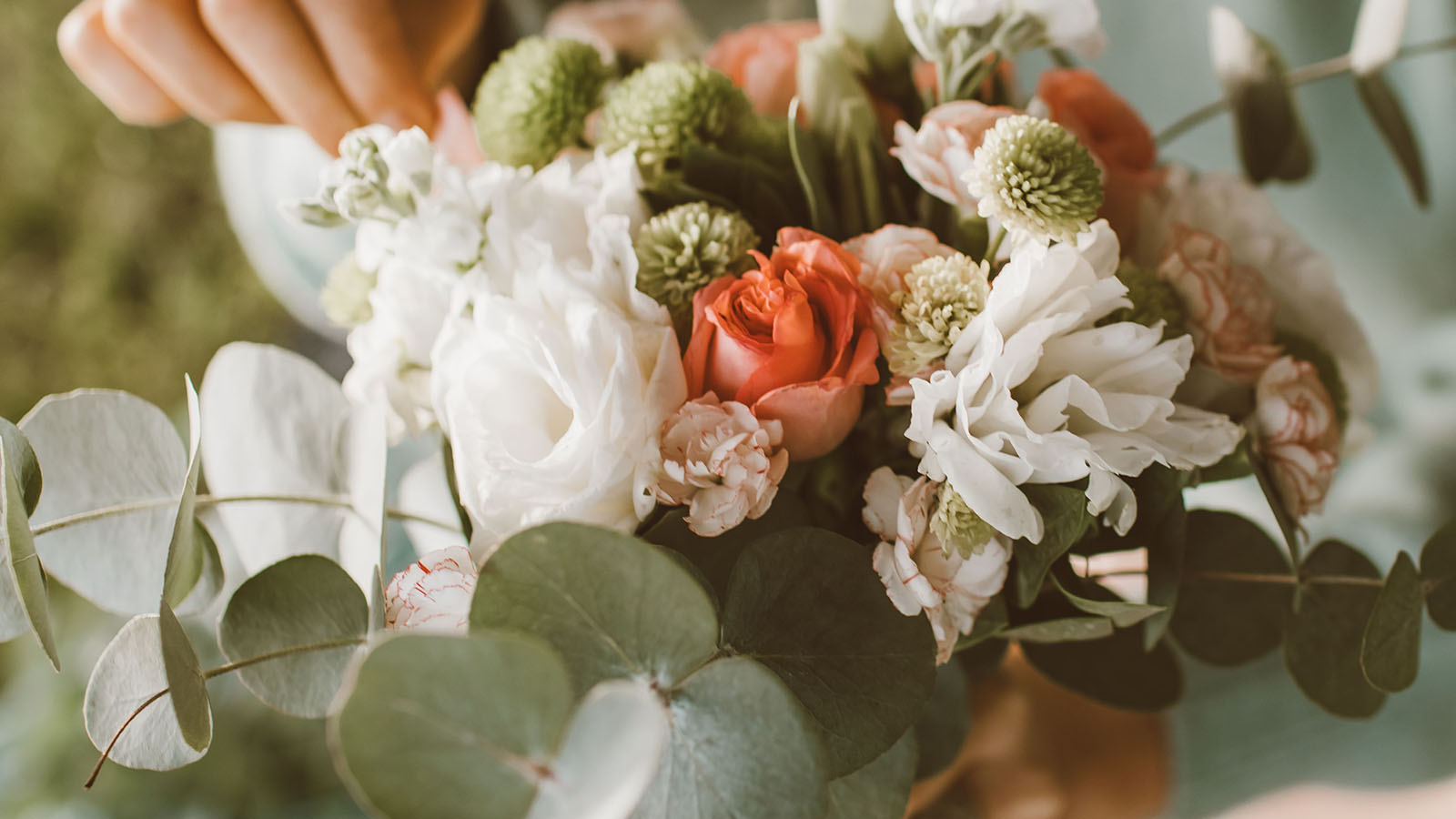
Start with the person
Flowers do not have to look traditionally funereal.
You might choose:
- flowers they grew in their garden;
- colours they often wore;
- something connected with a favourite season;
- a simple arrangement in their favourite colour;
- wild or informal flowers;
- a traditional tribute in white or softer shades;
- one particular flower that holds a family memory; or
- foliage, herbs or plants connected with their work or interests.
A keen gardener may be better represented by a loose, natural arrangement than a formal wreath. Someone known for their bright clothes may suit strong colour. For another person, a simple arrangement of greenery and white flowers may feel exactly right.
If you are uncertain, tell the florist a little about the person. A good florist can often suggest something appropriate from a description of their character, interests and the way you would like the funeral to feel.
Common types of funeral flowers
Florists use several names for funeral arrangements. Understanding the basic differences can make the conversation easier.
Coffin spray
A coffin spray is designed to rest on top of the coffin. It can cover most of the coffin or be made as a smaller arrangement.
The shape and size should be agreed with the florist, particularly if other items will be placed on the coffin. A flag, photograph, hat or another personal object may leave less space for flowers.
Coffin sprays are often ordered by close family, but this is a custom rather than a rule.
Sheaf or tied spray
A sheaf is a flat-backed arrangement that can be laid beside the coffin, displayed at the service or placed at a grave.
It is usually easier to carry than a large wreath and can be made in many different styles and sizes.
Wreath
A wreath is commonly circular, although other shapes are available. It can be displayed at the funeral and may later be placed at a grave or memorial.
The circle is sometimes associated with continuing love or remembrance, but you do not have to choose a wreath because of its traditional meaning.
Posy
A posy is a smaller, rounded arrangement. It can work well when several relatives or friends want to send separate tributes without creating very large displays.
Lettered and shaped tributes
Flowers can be arranged as names, family titles, hearts, crosses or objects connected with the person’s interests.
These can be very personal, although they usually require more time and specialist work. Ask the florist about ordering deadlines and how the tribute will be displayed and transported.
Baskets, vases and planted arrangements
A basket, vase or planted arrangement may be suitable for the ceremony, family home or gathering afterwards.
Check whether the venue permits containers and whether somebody will be responsible for taking the arrangement away.
Flower meanings are not fixed rules
You may come across lists explaining that lilies represent peace, roses signify love or rosemary means remembrance.
These associations can be helpful, but flower meanings vary between cultures, periods and personal traditions. You do not need to reject someone’s favourite flower because an online list gives it the “wrong” meaning.
Colour can be chosen in the same way. White flowers are common at funerals, but there is no requirement to use them. Red, yellow, pink, blue, purple and mixed arrangements can all be appropriate.
A flower’s personal meaning to the family is usually more important than its traditional symbolism.
Do we need flowers on the coffin?
No. Flowers on the coffin are entirely optional.
A coffin might instead carry:
- a flag or regimental drape;
- a photograph;
- a hat, scarf or item of clothing;
- a small arrangement gathered from a garden;
- a single flower;
- a religious symbol;
- an item connected with work, sport or a hobby; or
- nothing at all.
The venue, cemetery or crematorium may have restrictions on particular objects, materials or dimensions. We can check what is permitted before the arrangement is finalised.
Family flowers only
The phrase “family flowers only” means that the main floral tributes will be arranged privately by the family.
It does not mean that other people are unwelcome at the funeral. It simply lets friends and colleagues know that they should not order additional funeral flowers.
The funeral notice could say: “Family flowers only, please. Donations in memory of Joan may be made to…”
Or, if no donations are being collected: “Family flowers only, please. Your presence and thoughts are greatly appreciated.”
If you would be happy to receive flowers from anybody, give clear delivery instructions. Flowers are normally sent to the funeral director or another agreed address before the funeral rather than carried into the ceremony by guests.
Flowers or charity donations
Some families ask for donations to a charity instead of flowers. Others choose both.
There is no need to decide that one is more meaningful than the other. Flowers provide a visible tribute on the day, while donations can support work that mattered to the person or reflects an illness, interest or community connection.
You might choose:
- family flowers with donations invited from everybody else;
- flowers from anyone who wishes to send them;
- donations instead of flowers;
- no flowers or donations; or
- one small family arrangement with no request made of guests.
If donations are being collected, include the charity’s correct name and explain how people can contribute. Our funeral-planning guidance covers the wider arrangements, while our ideas for personalising a funeral include music, photographs and other simple individual touches.
What should be written on the card?
A message accompanying flowers can be very simple.
You do not need to find an original phrase or explain the whole relationship. A few honest words are enough:
- “With love and many happy memories.”
- “Thank you for your friendship.”
- “You will be greatly missed.”
- “Remembered always.”
- “With love from all the family.”
- “In memory of a much-loved colleague and friend.”
Using the name you knew the person by can make the message feel more natural.
If the card needs to show who sent the flowers, include names clearly. This can help the family identify the tribute later, particularly when several arrangements arrive together.
Religious and cultural traditions
Flowers are welcomed in many funeral traditions, but not all faiths and cultures use them in the same way.
Some families may prefer particular colours or types of flower. Others may regard flowers as unnecessary or inappropriate. Customs can also vary between individual families within the same faith.
If you are attending a funeral and are unsure whether to send flowers, check the funeral notice or ask the funeral director. It is better to ask than to rely on a general rule found online.
Working with a florist
The florist will need more than the date of the funeral.
Tell them:
- the date and time of the service;
- where the flowers should be delivered;
- the funeral director’s name;
- whether the funeral is a burial or cremation;
- the type and approximate size of the coffin tribute;
- the colours or flowers you prefer;
- any flowers you definitely do not want;
- the wording required on ribbons or cards;
- your available budget; and
- whether you hope to keep or reuse the flowers afterwards.
Funeral flowers normally need to arrive early enough for them to be checked, labelled and placed with the coffin before departure.
Ask the florist to agree delivery directly with the funeral director rather than leaving the timing to chance.
You do not have to spend a large amount
A meaningful tribute does not have to be large or elaborate.
Florists can usually adjust the size, flowers and design to suit a budget. Seasonal flowers may offer more choice at certain times of year, while a smaller arrangement using a few carefully selected flowers can be just as personal as a large display.
Be open about what you would like to spend. It gives the florist a realistic starting point and avoids designing an arrangement that has to be changed later.
Flowers gathered from a family garden may also be included, although they should be discussed with the florist in advance if they are to form part of a professionally constructed coffin spray.
What happens to the flowers after the funeral?
What happens afterwards depends on the venue and the family’s wishes.
Flowers may be:
- left at a grave;
- displayed temporarily in crematorium grounds;
- taken to the gathering after the funeral;
- divided between family members;
- placed at another meaningful location;
- reused to make smaller arrangements;
- pressed or dried as keepsakes; or
- composted when they have faded.
Do not assume that flowers left at a crematorium or cemetery will remain there indefinitely. For example, Wealden Crematorium explains that tributes are displayed for a limited period and asks visitors to remove wrapping from flowers placed in its grounds so they can be composted.
If you want to keep a ribbon, card or particular flower, mention this before the tributes are left at the venue. If you’re still comparing local venues, our guide to choosing a crematorium near Heathfield explains their settings, facilities and practical differences.
Making a more considered environmental choice
It is difficult to describe one type of funeral flower as automatically environmentally friendly.
Fresh flowers may have been grown locally or transported over a considerable distance. Artificial arrangements can be reused, but they may contain plastics and other materials that are difficult to recycle. The overall effect depends on how something is produced, transported, used and disposed of.
If environmental impact matters to you, ask the florist about:
- locally grown or seasonal flowers;
- arrangements made without floral foam;
- reusable containers;
- reduced plastic wrapping;
- plants that can be taken home afterwards;
- whether the flowers can be separated for composting; and
- how an artificial arrangement will be reused and eventually disposed of.
A rented arrangement may be practical when it will be used repeatedly, but it should not be presented as automatically greener without considering its materials and lifespan.
Flowers for a direct cremation or later memorial
An unattended cremation does not prevent a family from having flowers.
You might choose a small arrangement to accompany the coffin, flowers at a later memorial service or no flowers at the cremation itself. A gathering held weeks or months later may also allow you to use flowers that were important to the person or are in season at that time.
The ceremony and the cremation do not have to take place together for floral tributes to have meaning.
Choose what feels right for the funeral
Flowers can bring colour, familiarity and personality to a funeral, but they are not a measure of how much somebody was loved.
A large traditional coffin spray may feel right for one family. Another may choose garden flowers in a loose arrangement, a single rose, charity donations or no floral tribute at all.
There is no correct amount and no arrangement that every funeral ought to have. The right choice is the one that suits the person, the family and the farewell being created.